
Korean Rhapsody: Sijo Concludes Seattle Art Fair Week 2026 with Art, Poetry, Movement, and Cultural Connection
- MiYoung Seul Margolis 설미영

- 2 days ago
- 5 min read
Gallery B612’s Korean Cultural Week program brought Korean poetry into contemporary art through exhibition, live painting, dance, and community participation.
From July 23 through July 28, 2026, Gallery B612 presented Korean Rhapsody: Sijo, a multidisciplinary Korean cultural program developed for Seattle Art Fair Week as part of Korean Cultural Week, with support from the Consulate General of the Republic of Korea in Seattle and Margolis Arts Foundation.

Conceived and artistically directed by MiYoung Seul Margolis, the program brought together contemporary visual art, traditional Korean poetry, live painting, movement, artist conversation, and a hands-on Sagunja brush-painting workshop.
Rather than presenting Korean tradition as something fixed in the past, Korean Rhapsody: Sijo invited audiences to experience it as a living artistic language—one that could be read, viewed, heard, felt, and physically encountered.
The program unfolded across Seattle Art Fair Booth D17, Gallery B612’s Pioneer Square location (520 1st Ave S. Seattle, WA), and Art Love Salon at the Conru Art Foundation.
Korean Poetry Takes Shape at Seattle Art Fair
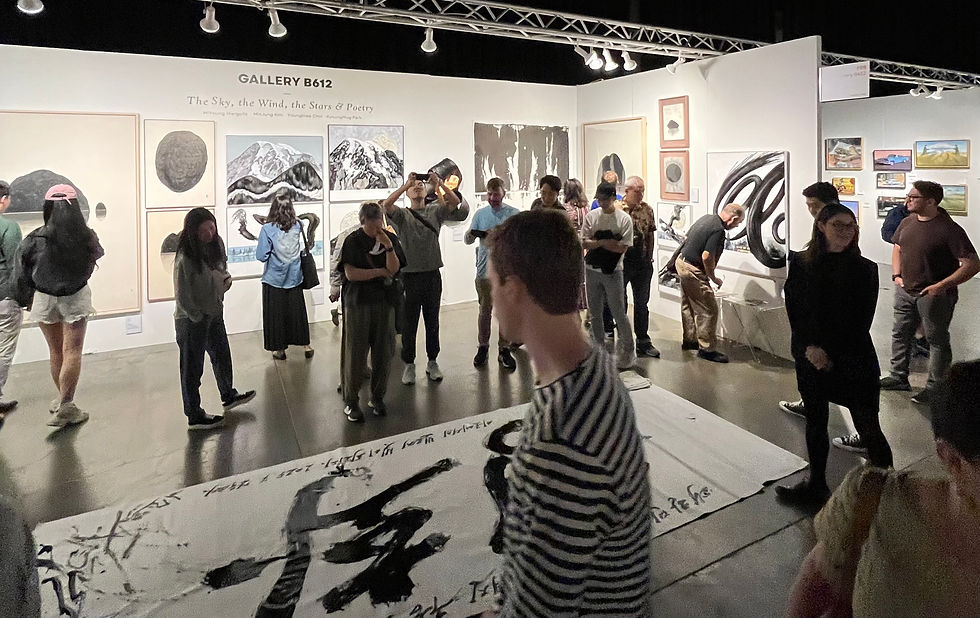
Gallery B612 presented Korean Rhapsody: Sijo at the tenth edition of Seattle Art Fair, held July 23–26 at Lumen Field Event Center. Seattle Art Fair brought together more than 100 galleries and exhibitors from the Pacific Northwest and beyond, creating an international setting for modern and contemporary art.


At Booth D17, featured artists Kyungmug Park, YoungHwa Choi, and MiYoung Seul Margolis explored the relationship between Korean cultural tradition and contemporary visual language through Hanji, ground ink, cardboard, acrylic, mixed media, relief, texture, shadow, and layered surfaces.
The exhibition drew inspiration from sijo, the traditional Korean poetic form recognized for its concise three-line structure, musical rhythm, emotional restraint, and subtle shift of meaning.
The works were influenced especially by Hwang Jini’s “Cheongsan-ri Byeokgyesu-ya” and Yun Seondo’s Ouga, including its images of bamboo and the moon.
Rather than illustrating these poems literally, the artists translated their emotional and philosophical qualities into material and form. A poetic pause became negative space. The movement of water became gesture. The resilience of bamboo appeared through upright structure, layered cardboard, and shadow.
The silence of moonlight emerged through restrained surfaces and atmospheric abstraction. Throughout the fair, the booth welcomed collectors, artists, cultural leaders, and visitors encountering Korean contemporary art for the first time. Conversations frequently moved beyond individual artworks toward Korean poetry, Hanji, ink traditions, identity, landscape, and the ways inherited artistic languages can continue to evolve.
The presentation also resulted in meaningful acquisitions, with works by the participating artists entering new private collections. These sales reflected both the individual strength of the artworks and a growing interest in contemporary practices rooted in Korean material, cultural, and philosophical traditions.
A Love Letter Written Through Body and Brush
On July 24, the program expanded from the exhibition booth into live performance with Korean Rhapsody: Sijo — A Love Letter at Gallery B612 Pioneer Square.


Featuring movement and performance by MiYoung Seul Margolis and live painting by Seoul-based artist Kyungmug Park, the work transformed the emotional world of Hwang Jini’s poetry into a living composition of body, brush, fabric, mask imagery, rhythm, and space.
The title A Love Letter referred not only to romantic longing. It became a love letter to the Korean language, poetry, cultural memory, and the relationship between past and present.
During the performance, Park painted directly onto a long silk fan while Margolis responded through lyrical contemporary movement. Traditional Korean mask imagery, including references to Gaksital and Hahoe masks, introduced further layers of cultural symbolism, humor, concealment, and transformation.
Pioneer Square’s official event presentation described the work as a meeting of silk-fan painting and “emotional and lyrical movement,” blending Korean calligraphy, folktales, and dance into a living composition.
The audience witnessed the artwork developing in real time. The brush did not simply accompany the dancer, and the dancer did not merely illustrate the painting. Each artist responded to the other, allowing movement and visual art to become two voices within the same poetic structure.
Following the performance, an artist conversation offered audiences an opportunity to learn more about the original sijo, the imagery within the work, and the artists’ contemporary interpretations. Approximately 30 guests attended the intimate evening presentation and conversation.
Learning Korean Aesthetics Through the Hand
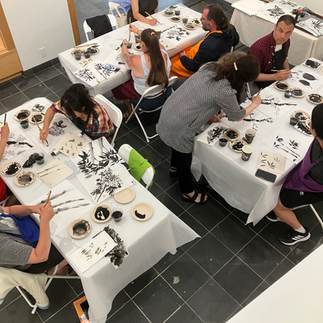
The program continued on July 25 with a sold-out Sagunja workshop led by YoungHwa Choi at Gallery B612 Pioneer Square.


Twelve participants were introduced to the Four Gentlemen of Korean brush painting: plum blossom, orchid, chrysanthemum, and bamboo. Each plant carries symbolic qualities related to character and inner cultivation—resilience, refinement, dignity, integrity, flexibility, and strength.
The workshop gave participants an opportunity to understand Korean aesthetics through direct practice. They learned how the angle and pressure of a brush could create rhythm, how ink shifted from dark to light, and how empty space could become as meaningful as the painted image.
The workshop’s focus on bamboo created a direct connection to Yun Seondo’s Ouga and to YoungHwa Choi’s contemporary bamboo-inspired artwork. Through this experience, cultural education became more than explanation. Participants encountered Korean artistic principles through their own bodies and hands.
An Encore at Art Love Salon
Following the strong response to the Gallery B612 presentation, Korean Rhapsody: Sijo — A Love Letter received a special encore performance on July 28 at Art Love Salon, presented at the Conru Art Foundation near the Seattle Art Museum.





Approximately 35 guests gathered for this second presentation, which placed the performance in a new architectural and cultural setting. Once again, live painting, movement, Korean poetry, and artist conversation came together, extending the life of the work beyond the initial Seattle Art Fair program.
The encore demonstrated one of the central intentions behind Korean Rhapsody: Sijo: cultural work does not need to remain inside a single exhibition booth or discipline. It can travel between an international art fair, an independent gallery, a workshop table, and a community gathering space while maintaining its artistic depth.
From Cultural Heritage to Contemporary Experience
Across its exhibition, performances, workshop, and artist conversations, Korean Rhapsody: Sijo reached audiences through multiple forms of participation.




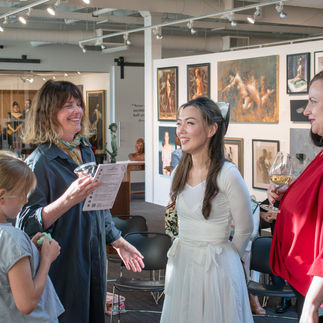
Some visitors first encountered the program visually through artworks at Seattle Art Fair. Others entered through poetry, live performance, conversation, or brush painting. Together, these experiences allowed Korean cultural heritage to be approached not as a distant historical object, but as something active, adaptable, and personally meaningful.
Korean Rhapsody: Sijo can move beyond written language and take shape as visual art, gesture, atmosphere, and space. Its emotional subtlety can become a brushstroke. Its longing can become movement. Its carefully held silence can become the space surrounding an artwork.
The project also reflected Gallery B612’s broader mission to build bridges among artists, disciplines, histories, and communities. By placing Korean poetry and artistic traditions within the international context of Seattle Art Fair while also creating intimate opportunities for performance and learning, the program connected cultural representation with genuine audience engagement.
A Message from the Artistic Director
“Korean Rhapsody: Sijo was created as a space for cultural exchange—where people could enter, participate, and recognize something of their own stories within another tradition.
I bring my Korean language, history, and artistic heritage into this work together with my experience of living here—adapting, blending, listening, and learning from others. To me, contemporary interpretation means allowing tradition to meet the people and places with whom we now share our lives.
Through poetry, art, movement, live painting, and participation, I hoped audiences could experience Korean culture rather than only observe it. This program was our love letter to Korean artistic tradition—and to the possibility of building meaningful connection across cultures.”
— MiYoung Seul Margolis
Program Concept & Artistic Direction
Founder, Owner & Director, Gallery B612


Comments